

Optimize embedded Linux applications without replacing your Linux kernel or BSP
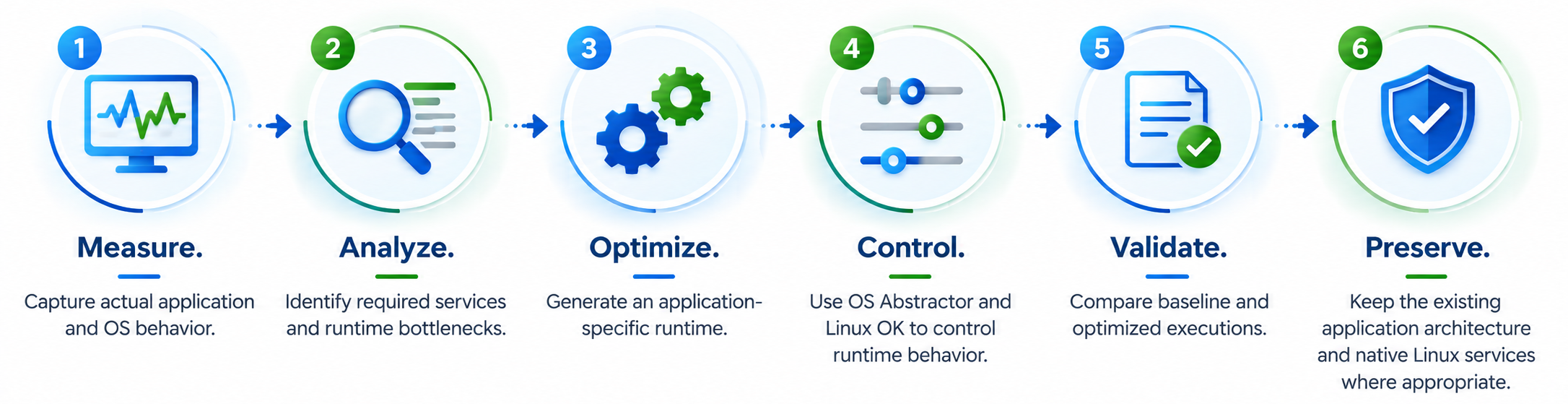
MapuSoft’s Linux OK™ (Linux Optimization Kit) combines application profiling, optimized code generation, and OS abstraction to help embedded developers reduce runtime overhead and improve application responsiveness.
Optimize performance
Reduce selected API, scheduling, and resource-management overhead
Manage resources efficiently
Use thread pooling, resource pooling, and configurable memory management.
Measure and validate
Profile application behavior and compare performance before and after optimization.
Preserve your platform
Retain your existing Linux kernel, BSP, and hardware while optimizing supported application components.




What Is Linux OK?
MapuSoft Linux OK combines a Linux/POSIX interface, OS Abstractor technology, application-OS profiling, and optimized target code generation. It configures runtime components around the OS services and resources an application actually uses, supporting both application-specific optimization and portability across supported environments.
- Linux/POSIX application interface and native Linux integration
- Application-OS profiling and profile-guided optimization
- Application-specific optimized interface and runtime code generation
- Configurable target and resource requirements
- Thread and resource pooling
- Tiered memory pools, shared memory, and common IPC interfaces
- Scheduling/runtime controls and soft-reset recovery capabilities
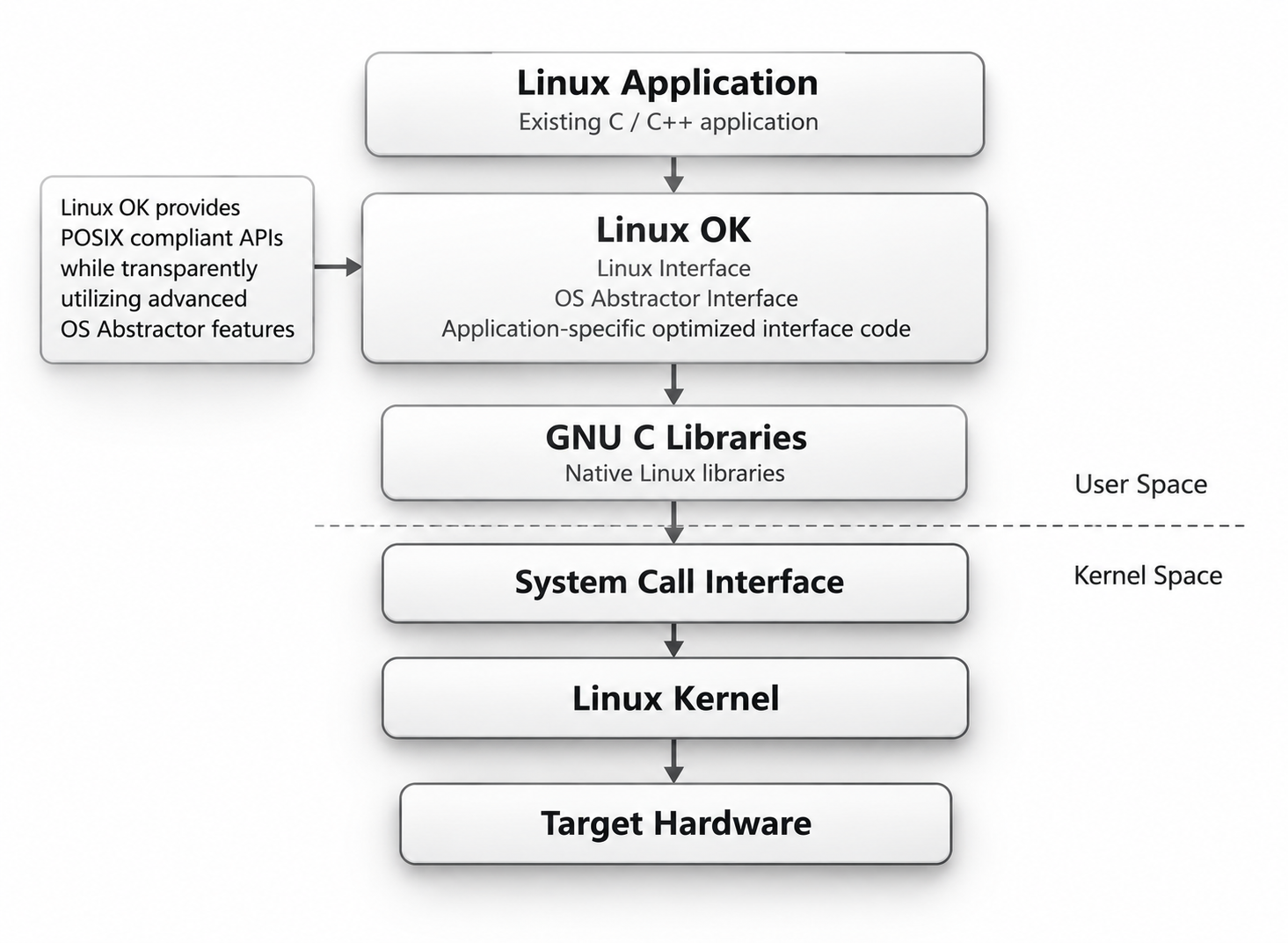
Conceptual Linux Architecture
How It Works
Linux OK operates above the existing GNU C libraries, system-call interface, and Linux kernel. It is designed to preserve the existing kernel, BSP, hardware, and overall application architecture.
Key Optimization Areas
- CPU efficiency and selected OS/API interaction overhead
- Scheduling behavior, task switching, and user/kernel-mode transitions
- Thread and OS-resource creation through pooling and reuse
- Memory footprint and shared-memory data movement
- Application initialization and boot-time resource overhead
Results depend on the application, workload, target hardware, and configuration. Linux OK does not guarantee a fixed performance improvement or hard-real-time behavior.
Linux/POSIX Portability and Native Integration
Linux OK provides a Linux/POSIX-oriented interface across supported environments. Applications can continue using native Linux services where appropriate, and supported native Linux threads can be adopted into the OS Abstractor environment. API availability and behavior depend on the Linux OK release and target configuration.
Embedded Linux, ARM64, and Yocto
Linux OK can be integrated with supported 32-bit or 64-bit Linux systems, SMP or UP configurations, ARM64 targets, Yocto-based builds, and cross-development toolchains. Integration depends on the specific kernel, BSP, compiler/toolchain, hardware, and Linux OK release.
Measure the Results
Evaluate Linux OK using the same target hardware, compiler, Linux configuration, workload, and test method for baseline and optimized runs. Depending on the application, measurements can include:
- CPU utilization and application response time
- API execution time, throughput, and thread latency
- Task-switching and user/kernel-mode behavior
- Resource utilization, memory footprint, and initialization/boot time
A proof of concept can include application/build assessment, integration, functional validation, baseline and Linux OK profiling, code generation, comparative testing, and a report of measured results, limitations, and remaining work.
Take Control of Your Linux Application’s Runtime
Improve performance. Manage resource overhead. Increase portability. Gain greater control over application runtime behavior—without abandoning Linux.
MapuSoft’s Global Industrial Clientele
Working with Leaders in Every Industry.












Explore Products
AppCOE
OS Changer
Programming Language Changer
Hardware/OS Support
Try or Buy
Trial Software
Contact Sales
Installation Help
Training
Get Support
Support Portal
FAQ
Technical Data
Testimonials
Company
Career
News Room
Contact Us
Customers